Short shipment
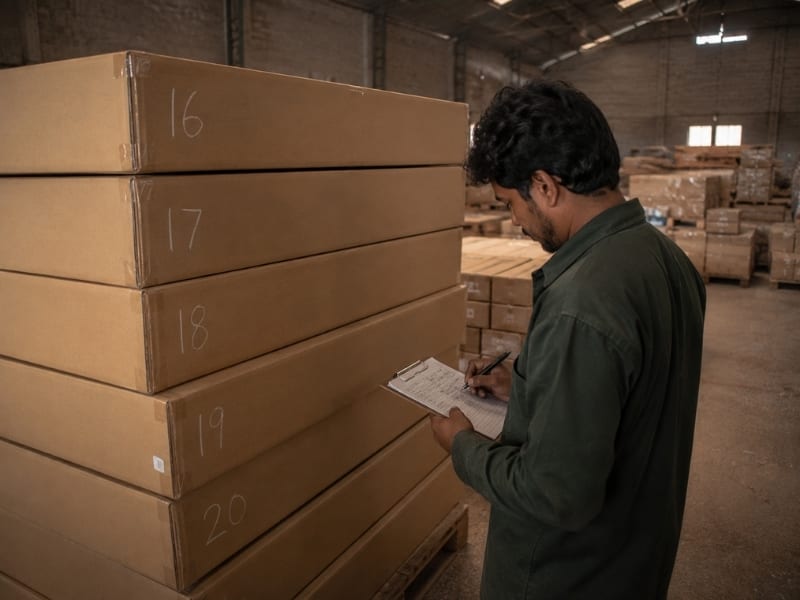
Cartons counted at the door, not the invoice. Orders arrive 5–20% short with no recourse after payment.
Why it happens
The count is taken against the supplier’s own packing list rather than against your invoice, so a document that agrees with itself passes.
On consolidated containers built by an export house from several factories, a per-container count tells you the box is full — not that everything in it is yours.
Discovered at destination, it is a credit-note negotiation with a supplier who already holds your balance payment. Found in India, it is a loading correction.
How to specify against it
A defect you can name in the purchase order is a defect an inspector can fail the shipment on. One you only describe in an email is not.
- Require the tally to be reconciled to your commercial invoice and purchase order, not only to the packing list.
- Require an SKU-level count rather than a carton count, so a full container of the wrong mix cannot pass.
- On any consolidated load, require a per-factory tally at the door.
- Tie the balance payment to a passed inspection report, so the count happens while the leverage is still yours.
The inspection point
Each of these is a numbered check on a published scope, so you can see exactly which visit finds this and when.
Other defects in the library
Wrong or missing hardware
DEF-053 · Hardware · Kit
Flat-pack kits with mismatched fittings turn a sellable SKU into a returns problem.
Container loading damage
DEF-061 · Loading · Stacking
Poor dunnage and stacking crush the bottom tier before the ship leaves Mundra.
Unseasoned timber cracking
DEF-011 · Wood · Moisture
Sheesham shipped above 12% moisture splits when it meets central heating in the US or EU. The single largest claim category.
Catch this one before it ships.
Confirmed within 2 hours. Report within 24 hours of inspection. Paid by buyers only — never by factories.
Book an inspection