Container loading damage
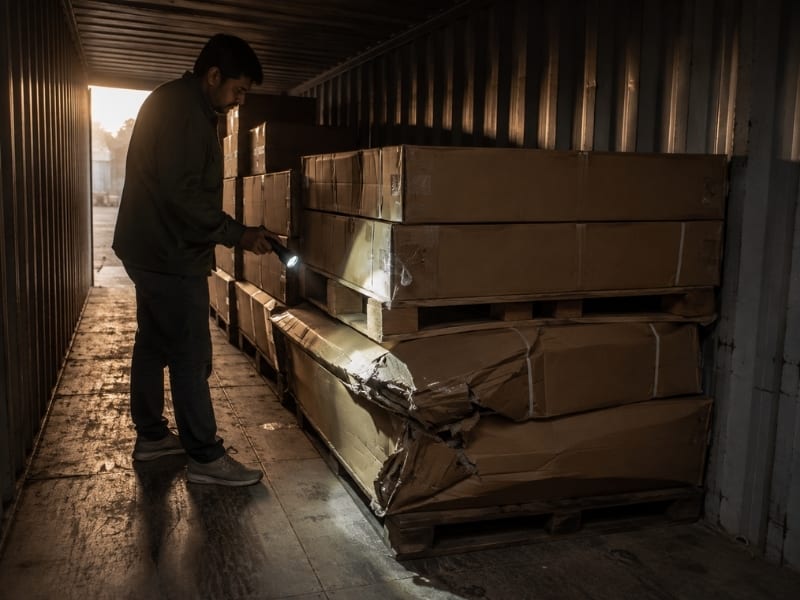
Poor dunnage and stacking crush the bottom tier before the ship leaves Mundra.
Why it happens
Loading is paid by the container, not by the care taken, so heavy cartons go on top of light ones and void columns are left unbraced.
A stack that stands still in a yard does not stand still at sea. Weeks of vibration and roll compress the bottom tier, and unbraced voids let the load shift into itself.
The damage is sealed inside the box. It is created after the goods passed inspection, which is exactly why a passed pre-shipment inspection does not cover it.
How to specify against it
A defect you can name in the purchase order is a defect an inspector can fail the shipment on. One you only describe in an email is not.
- Specify the stacking rule — heavy below light, maximum tier count for the carton spec — and put it in the loading instructions.
- Specify dunnage: airbags, corner boards and lashing where the load needs them, and require them photographed in place.
- Require a door-to-back photo sequence of the load as executed, and the seal number photographed close up.
- Book loading supervision as well as inspection. They are days apart and protect against completely different failures.
The inspection point
Each of these is a numbered check on a published scope, so you can see exactly which visit finds this and when.
Other defects in the library
Unseasoned timber cracking
DEF-011 · Wood · Moisture
Sheesham shipped above 12% moisture splits when it meets central heating in the US or EU. The single largest claim category.
Finish bloom in transit
DEF-024 · Finish · Humidity
Lacquer cured during monsoon humidity clouds and blushes inside a hot container.
Joint and frame failure
DEF-032 · Structure · Joint
Subcontracted assembly with undersized tenons or missing corner blocks — invisible until a customer sits down.
Catch this one before it ships.
Confirmed within 2 hours. Report within 24 hours of inspection. Paid by buyers only — never by factories.
Book an inspection