Dead and cracked knots
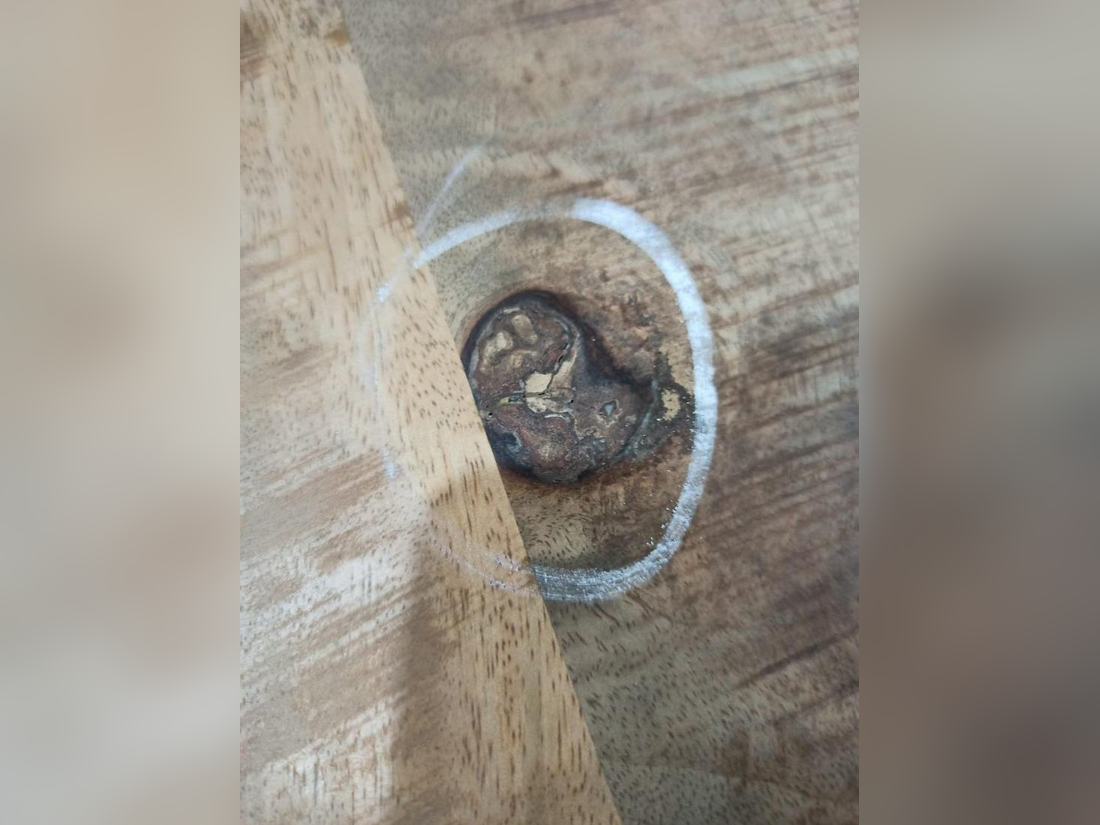
Dead knots that crack, shrink or fall out of a solid wood top, and cracks that start at a knot and run into the surface.
Why it happens
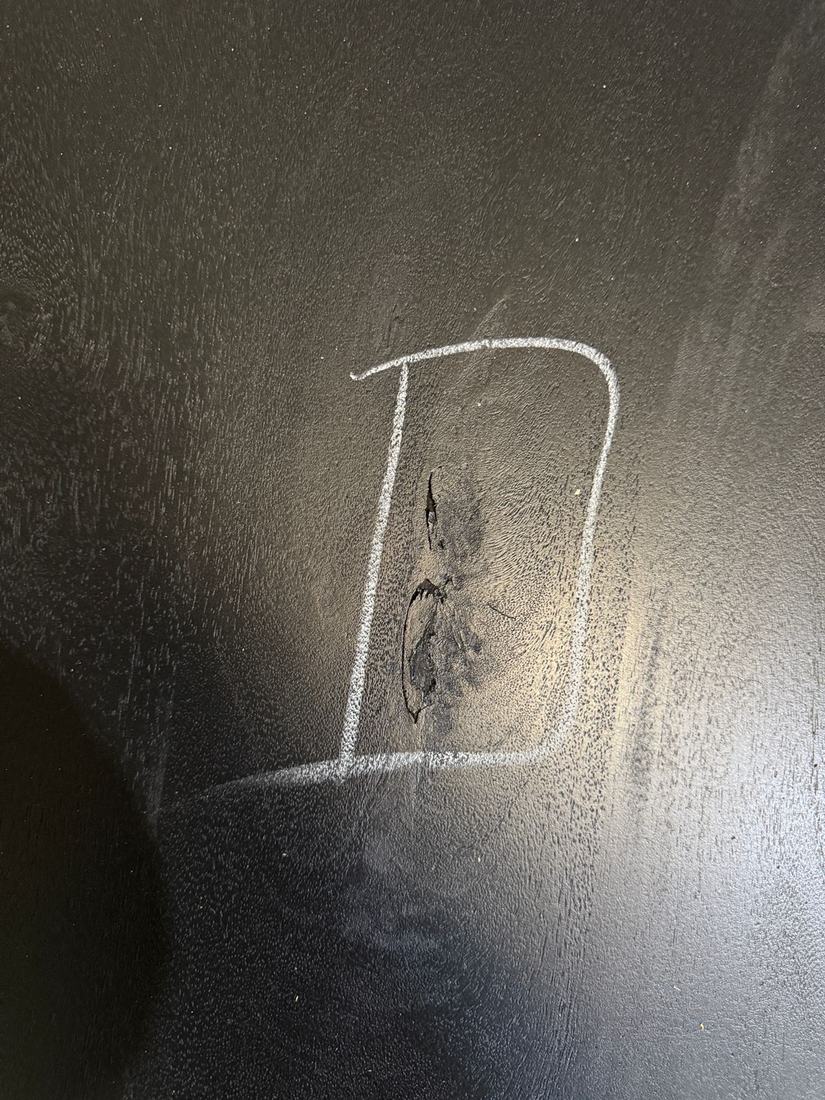
A dead knot is the stub of a branch that was not growing into the tree around it, so it is not bonded to the surrounding wood. As the board dries it shrinks, cracks and can drop out, leaving a hole.
The grain bends around a knot, so a crack often starts there when the wood dries and runs out into the top.
Knots are part of solid wood. Whether one is a defect depends on its type, size and position, which is why the acceptable grade has to be written down before production.
More examples
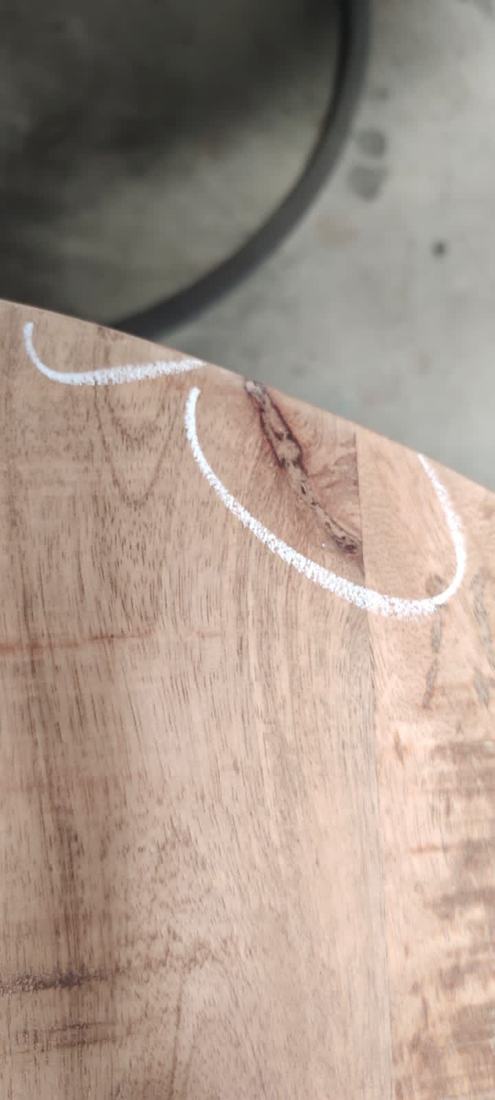
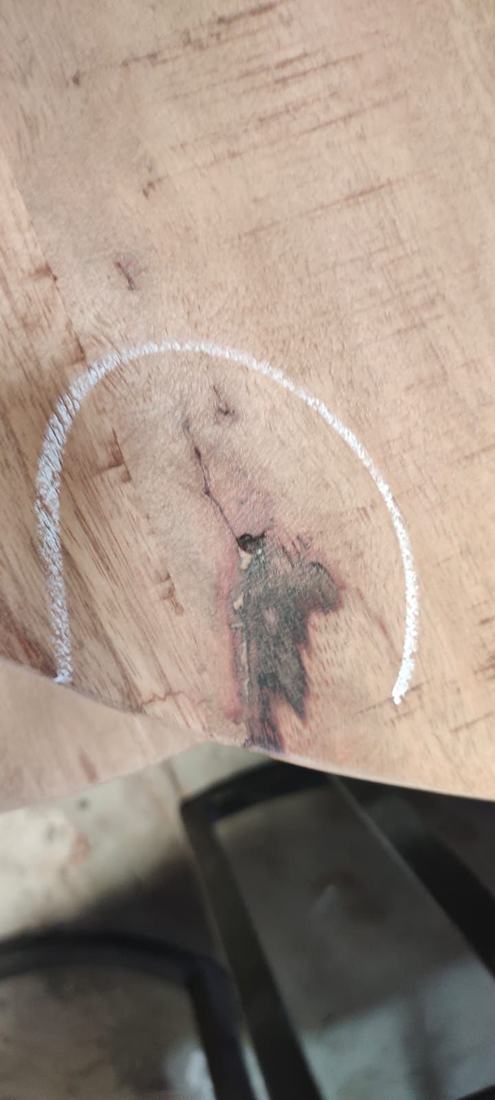
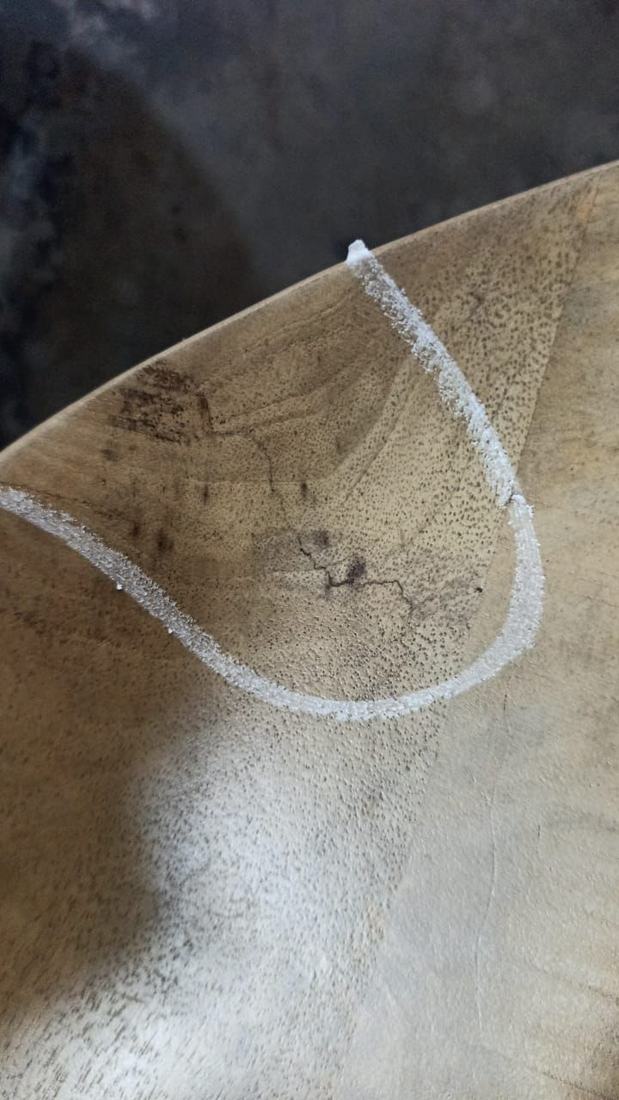
Photos from Qualis inspections. The chalk marks are the inspector’s.
How to specify against it
A defect you can name in the purchase order is a defect an inspector can fail the shipment on. One you only describe in an email is not.
- State the wood grade: which knots are allowed (sound, tight), their maximum size, and whether dead or loose knots are acceptable at all.
- Say where knots may not appear: edges, corners and joints.
- Say whether knots may be filled and how the filling must look.
- Attach photos of acceptable and unacceptable knots to the PO.
The inspection point
Each of these is a numbered check on a published scope, so you can see exactly which visit finds this and when.
Other defects in the library
Open glue lines in tops
DEF-014 · Wood · Glue line
Boards in a glued-up solid wood top pulling apart, leaving a visible gap along the joint on the face, edge or underside.
Sanding marks and surface damage
DEF-027 · Finish · Surface
Swirl and grinding marks, torn grain, blotchy stain and small dents that show through the finish on a solid wood top.
Unseasoned timber cracking
DEF-011 · Wood · Moisture
Sheesham shipped above 12% moisture splits when it meets central heating in the US or EU. The single largest claim category.
Catch this one before it ships.
Confirmed within 24 hours. Report within 24 hours of inspection.
Book an inspection