Dining tables: quality issues and what to check before you order and before packing
A solid wood dining table fails through its top: cracks and open joints when wet wood dries in a heated home, cupping, and tops screwed down so tight they cannot move. Specify the moisture limit, top thickness and how the top is fixed, then check flatness, wobble and moisture on sampled tables before shipment.
How it is usually made: A solid top of glued boards on an apron and legs, or on a trestle or pedestal base; legs often bolted to the apron with corner brackets so they can be shipped knock-down.
Put these in the purchase order
An inspector can only hold the factory to what is written down. Add your AQL, moisture limit and golden sample to every order as well.
| Specify | Why it matters |
|---|---|
| Moisture limit for the top | Wide solid tops are where wet wood shows first. Put the limit for your destination in the PO. |
| How the top is fixed | Slotted fixings or buttons that let the top move across the grain; a top screwed tight splits. |
| Top thickness, size and edge profile | With tolerances, plus the finish and sheen against a golden sample. |
| Leg fixing for knock-down | Corner brackets and bolts, with the hardware listed per table. |
| Extension mechanism | For extending tables: the slide type, leaf storage and how leaves are matched to the top. |
Defects to look for on a solid wood dining table
Usual class by our default definitions: critical is unsafe or unshippable, major affects function, saleability or durability, minor is cosmetic. Your own defect list always overrides it.
| Defect | Usual class | Usual cause | How it is checked |
|---|---|---|---|
| Leg or apron failure, top not secured | Critical | Brackets missing or undersized, bolts not engaging. | Assemble legs from the packed hardware and load the table. |
| Cracked top or opening glue lines | Major | Boards above the moisture limit, top fixed too tight to move. | Pin-meter readings across the top; inspect end grain and joints. |
| Cupped or twisted top | Major | Boards not matched for grain, uneven finish on the two faces. | Straight edge across and along the top. |
| Table rocks on a flat floor | Major | Legs cut unevenly or fitted out of square. | Rock test on a flat surface after assembly. |
| Extension slides sticking, leaves not matching | Major | Slides fitted out of line; leaves finished separately. | Open and close the extension several times; compare leaves with the top. |
| Finish runs, dust and sanding marks on the top | Minor | Finishing in a dusty or humid shop. | Raking light across the top surface. |
Dining tables we have inspected
Photos from our inspections and our anonymised sample inspection reports. Brand names, item numbers, labels and people are blurred.
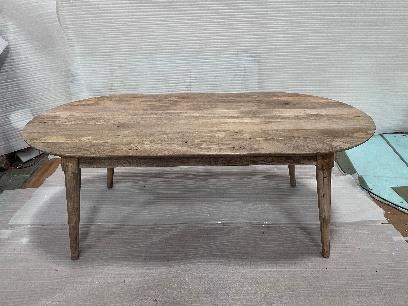
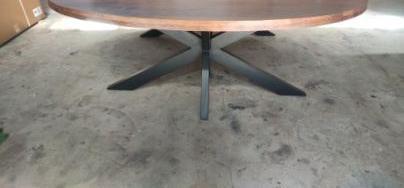
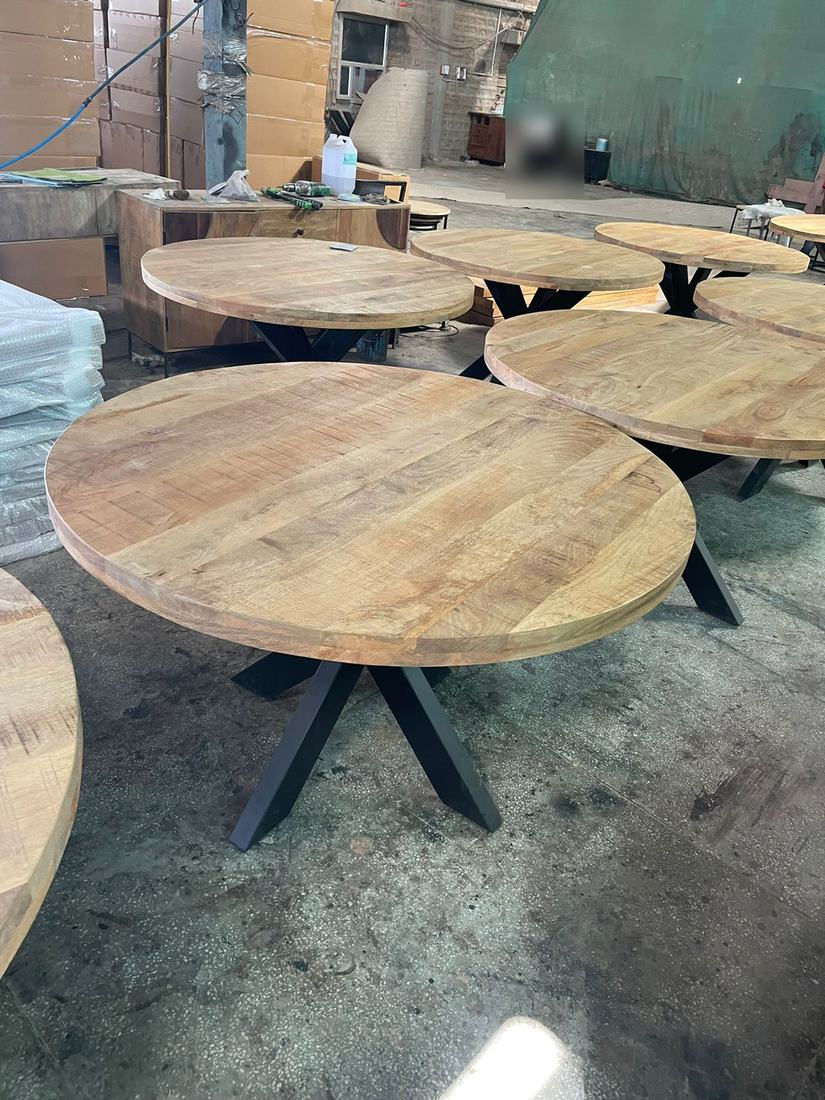
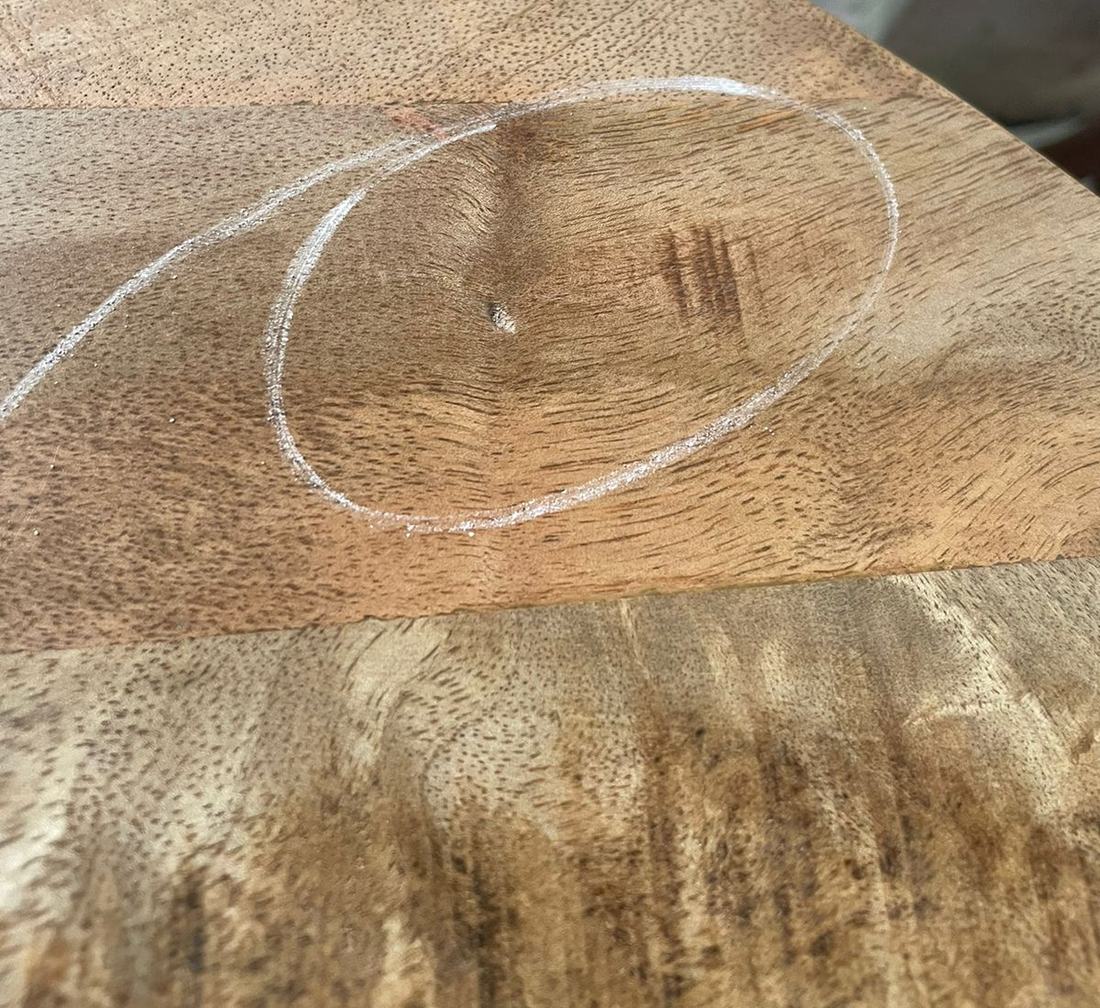
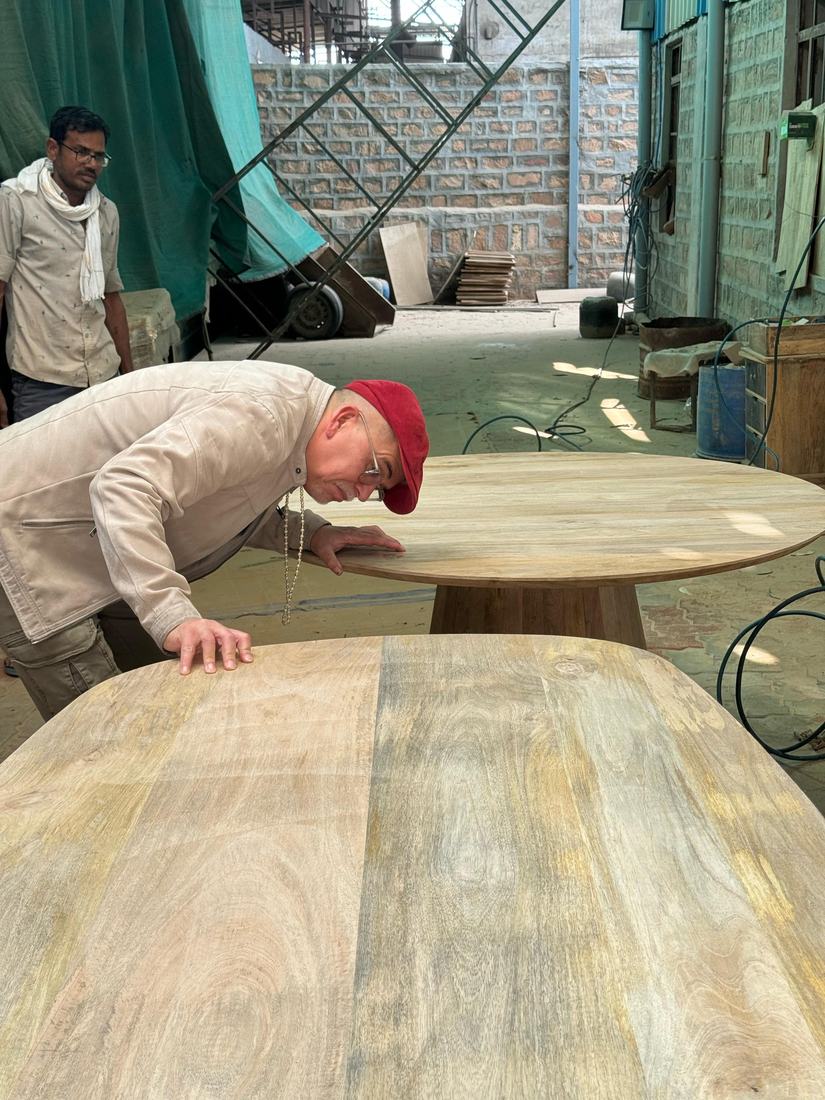
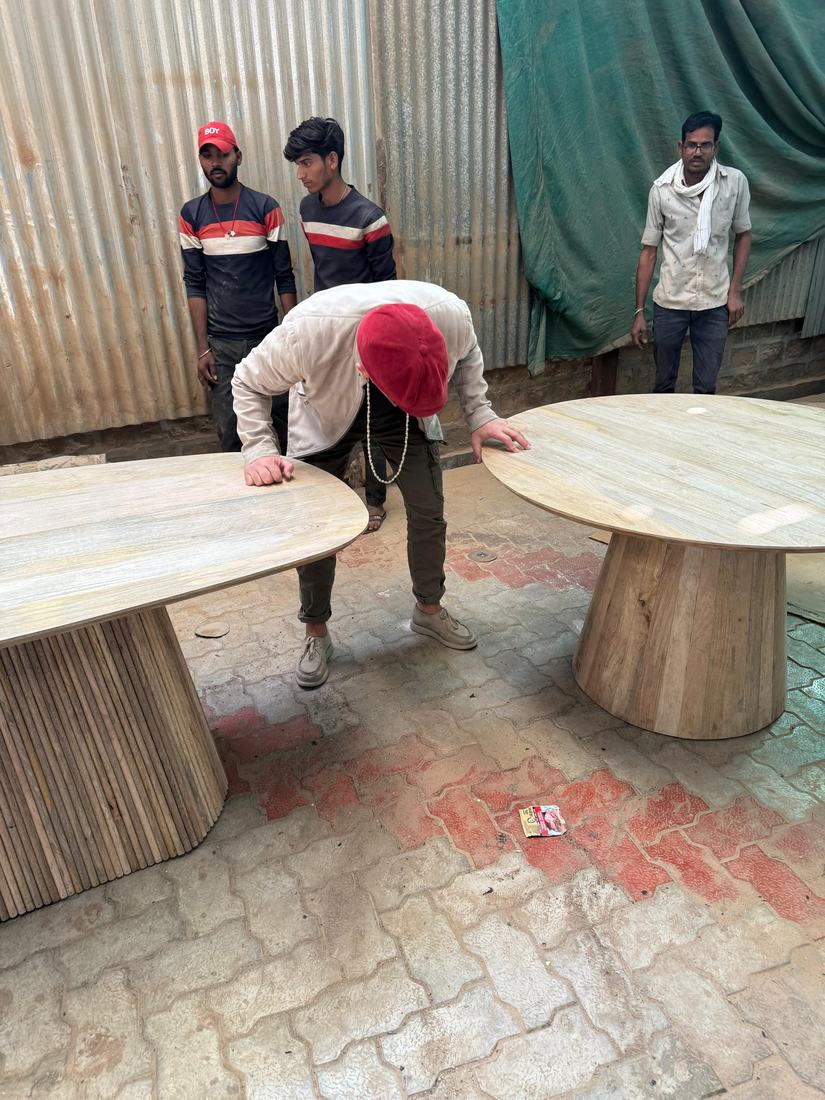
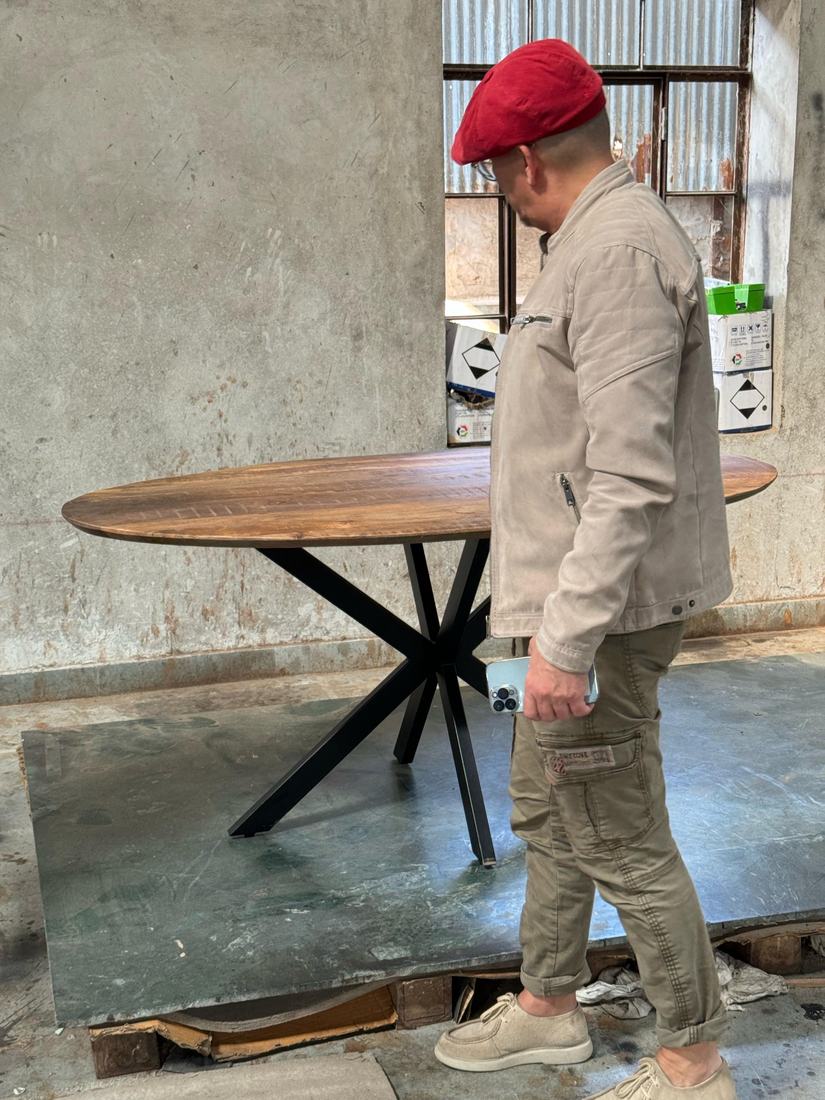
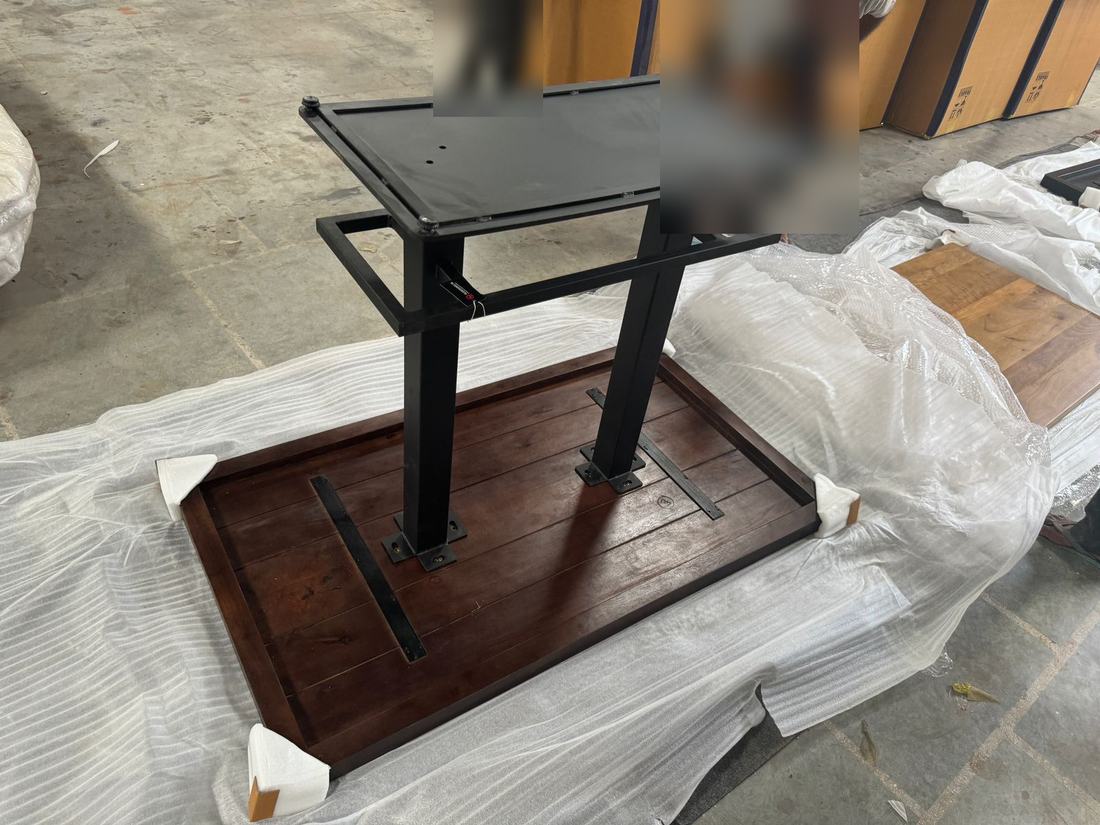
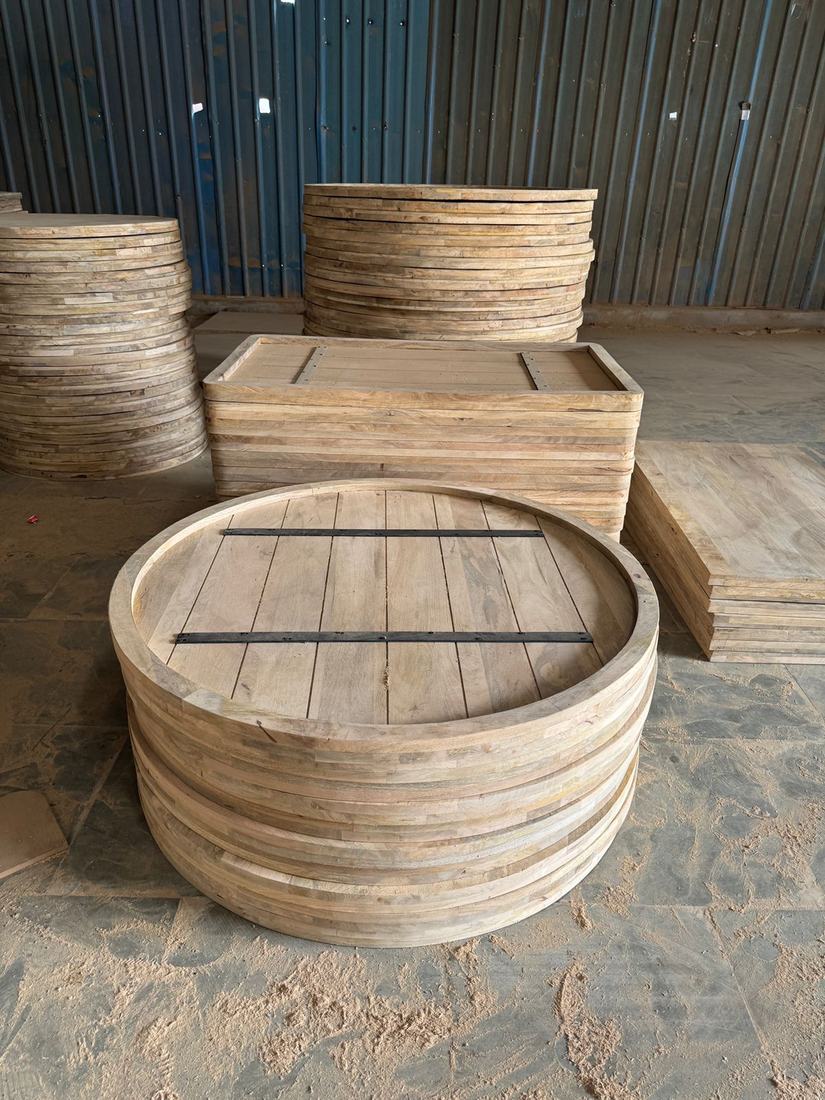
What to check during production, at inspection and before packing
During production
- Moisture of top boards before glue-up.
- Grain matching and glue lines on first tops.
- Top fixing method on the first assembled tables.
At pre-shipment inspection
- Pin-meter readings at the centre and edges of sampled tops.
- Straight-edge check for flatness across and along the top.
- Assemble legs from the packed hardware; rock-test and load the table.
- Check the top can move at its fixings, not screwed rigid.
- Cycle extension slides and match leaves to the top.
Before packing
- Top packed flat with full-face protection and corner protectors.
- Legs packed so they cannot strike the top in transit.
- Hardware kit sealed and taped to a named part.
- Desiccant where the route is humid, so the top does not take up moisture at sea.
Moisture, finish and sampling
- Moisture: put a limit for your destination in the PO and have it read with a pin meter on sampled pieces. Wood shipped wet cracks after delivery. Targets by market are in the wood guide.
- Finish: approve a golden sample and hold every batch to it; finishes cured in humid weather can bloom in transit.
- Sampling: AQL 2.5 for major and 4.0 for minor defects at General Level II by default. The AQL calculator gives the sample size for your order.
- Hardware: count kits against the bill of materials; wrong or missing hardware turns a sound product into a return.
Rules that may apply to a dining table
| Rule | When it applies |
|---|---|
| Formaldehyde (TSCA Title VI, REACH) | If the top or parts use MDF, plywood or particleboard. |
| EN 12521 (domestic tables) | Often referenced by EU buyers for strength and stability. |
Dining tables: questions
Why do solid wood table tops crack after delivery?
Because the wood shipped above its moisture limit or the top was fixed too tight to move. When it dries in a heated home it shrinks across the grain and splits.
How should a solid wood top be fixed to the base?
With slotted fixings or buttons that hold it down but let it move across the grain. Check this at inspection by looking under the top.
Can a cupped top be fixed?
Rarely after finishing. It is cheaper to catch at the glue-up stage in a during-production inspection than at pre-shipment.
Related guides
- Dining chairs: Joint strength, corner blocks, wobble, seat height, colour matching across a set.
- Benches: Seat sag over the span, leg joints, storage lids and stays, cushions.
- Sideboards: Door gaps and hinge sag, drawer runners, shelf support, back panel, top cracking.
- Marble and stone-top tables: Cracks and filled fissures, sealing and stains, base strength, top fixing, crating.
- All furniture inspection guides
- Free furniture inspection checklist (PDF)
Have your dining table order checked before you pay
Tell us the factory, the product and the date. We reply with scope and a fixed quote within 24 hours. A pre-shipment inspection starts at $249.
Talk to an inspector Pre-shipment inspection