Cabinets and cupboards: quality issues and what to check before you order and before packing
A solid wood cabinet fails at its doors, glass and fittings: doors that sag or will not close, glass that is loose or cracked, drop-down flaps without stays, built-in lights that do not work or have exposed wiring, and tall units that tip. Specify glass, hinges, any lighting and a wall fixing in the order, then cycle and test every fitting on sampled units before shipment.
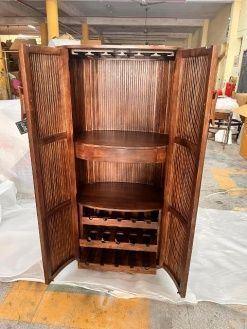
How it is usually made: A carcass of solid wood frames and panels with hinged or sliding doors, often glazed on display cabinets; shelves of wood or glass; bar cabinets add bottle racks, glass holders, a drop-down flap and sometimes built-in lighting.
Put these in the purchase order
An inspector can only hold the factory to what is written down. Add your AQL, moisture limit and golden sample to every order as well.
| Specify | Why it matters |
|---|---|
| Glass type, thickness and edges | For doors and shelves: toughened or annealed, thickness and edge finish. Glass is the part most often broken or loose on arrival. |
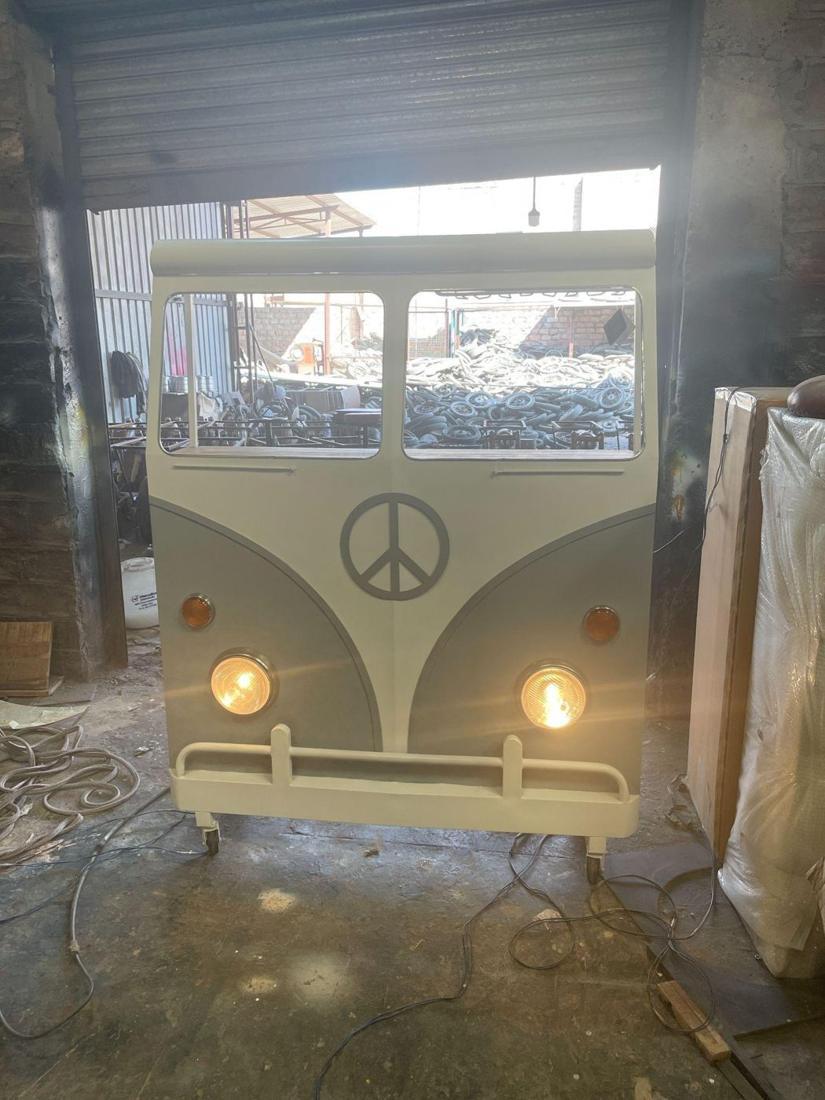
| Lighting specification | If lit: light, driver, switch, cable and plug type for the destination, and the electrical approval the buyer needs. Without it the factory fits whatever is cheapest. |
| Hinges, stays and locks | Hinge type and make, a stay for any drop-down flap, and locks with keys counted per unit. |
| Wall fixing for tall units | A tall, shallow cabinet with glass doors needs a supplied wall fixing. |
| Back, shelf and interior materials | Plywood or MDF backs, mirrored backs and interior panels bring formaldehyde rules into scope. |
Defects to look for on a solid wood cabinet
Usual class by our default definitions: critical is unsafe or unshippable, major affects function, saleability or durability, minor is cosmetic. Your own defect list always overrides it.
| Defect | Usual class | Usual cause | How it is checked |
|---|---|---|---|
| Cabinet tips with doors open or flap down | Critical | Shallow carcass, heavy glass doors, no wall fixing supplied. | Open every door and flap on a flat floor and push the top edge. |
| Exposed wiring or lighting fault | Critical | Cable pinched by a door or shelf, no strain relief, wrong plug. | Power the light with the destination plug; trace the cable route and fixings. |
| Glass loose, cracked or with sharp edges | Critical | Glazing beads missing, glass forced into a rebate out of square, edges not finished. | Inspect every pane and its fixing; run a hand along exposed edges. |
| Drop-down flap falls without a stay | Major | Stay not fitted or under-rated. | Open and release the flap on sampled units. |
| Doors sag, rub or will not close | Major | Hinges out of line, carcass out of square, heavy glazed door on light hinges. | Cycle every door; check gaps and that doors close flush. |
| Locks not working or keys missing | Major | Lock fitted off-line; keys not packed. | Lock and unlock each door; count keys. |
| Unfinished interior or rough shelf edges | Minor | Interior finishing skipped; visible through glass doors. | Inspect inside through the glass and with doors open. |
Cabinets and cupboards we have inspected
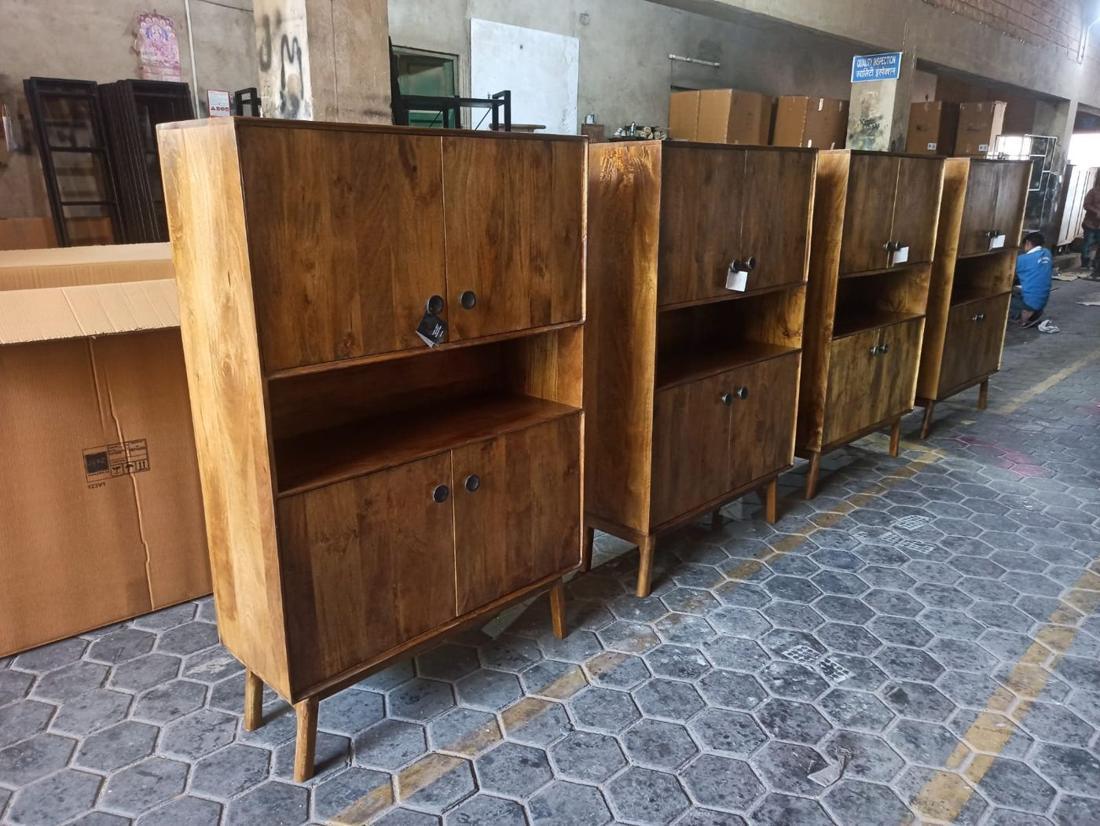
Photos from our inspections and our anonymised sample inspection reports. Brand names, item numbers, labels and people are blurred.
What to check during production, at inspection and before packing
During production
- Carcass square on first units, checked by diagonals, before doors and glass are fitted.
- Glass type and edge finish on the first panes against the specification.
- Lighting parts against the approved list before they are wired in.
At pre-shipment inspection
- Open every door and flap at once on a flat floor and check stability; confirm the wall fixing is in the kit.
- Cycle doors, flaps and locks; check gaps and stays.
- Inspect every glass pane, its fixing and its edges.
- Switch on lit units with the destination plug; check the cable is fixed clear of hinges and shelves.
- Count keys, shelf pins, glass shelves and hardware against the BOM.
Before packing
- Glass shelves removed and packed separately with edge protection; glazed doors protected on both faces.
- Doors and flaps blocked shut with material that leaves no mark.
- Light fittings, drivers and cables secured so they cannot swing or pull in transit.
- Keys, wall fixing and spare parts in a labelled bag fixed inside the unit.
Moisture, finish and sampling
- Moisture: put a limit for your destination in the PO and have it read with a pin meter on sampled pieces. Wood shipped wet cracks after delivery. Targets by market are in the wood guide.
- Finish: approve a golden sample and hold every batch to it; finishes cured in humid weather can bloom in transit.
- Sampling: AQL 2.5 for major and 4.0 for minor defects at General Level II by default. The AQL calculator gives the sample size for your order.
- Hardware: count kits against the bill of materials; wrong or missing hardware turns a sound product into a return.
Rules that may apply to a cabinet
| Rule | When it applies |
|---|---|
| Formaldehyde (TSCA Title VI, REACH) | If the back, shelves or interior are plywood, MDF or particleboard. |
| US tip-over rule | Only if the cabinet is made or marketed for clothing storage and meets the size thresholds; display and bar cabinets usually are not. |
| Electrical safety for built-in lighting | If lit: the light and driver must meet the destination’s electrical safety rules and marking. Confirm the requirement with your compliance team. |
| EN 14072 (glass in furniture) | Often referenced by EU buyers for glazed doors and shelves. |
Cabinets and cupboards: questions
What should I check on a glass-door display cabinet?
Stability with the doors open, the glass type and how each pane is fixed, the edges, and that the doors close flush. Glass is the part most often damaged, so check the packing too.
What extra checks does a bar cabinet with lighting need?
Switch the lights on with the plug for your market, trace the cable so no door or shelf can pinch it, and check the drop-down flap has a working stay.
Does the US tip-over rule apply to cabinets?
Only to units made or marketed for clothing storage that meet the size thresholds. Display and bar cabinets usually are not, but tall glazed cabinets can still tip, so supply a wall fixing.
Related guides
- Sideboards: Door gaps and hinge sag, drawer runners, shelf support, back panel, top cracking.
- Mirrors and mirror frames: Hanging hardware, mirror glass and silvering, distortion, frame joints, crating.
- Wardrobes: Tip-over safety, large-door warp and hinge sag, hanging rail, knock-down fittings.
- Bookcases and shelving: Shelf sag and pins, tipping and wall fixing, back panel and racking.
- All furniture inspection guides
- Free furniture inspection checklist (PDF)
Have your cabinet order checked before you pay
Tell us the factory, the product and the date. We reply with scope and a fixed quote within 24 hours. A pre-shipment inspection starts at $249.
Talk to an inspector Pre-shipment inspection